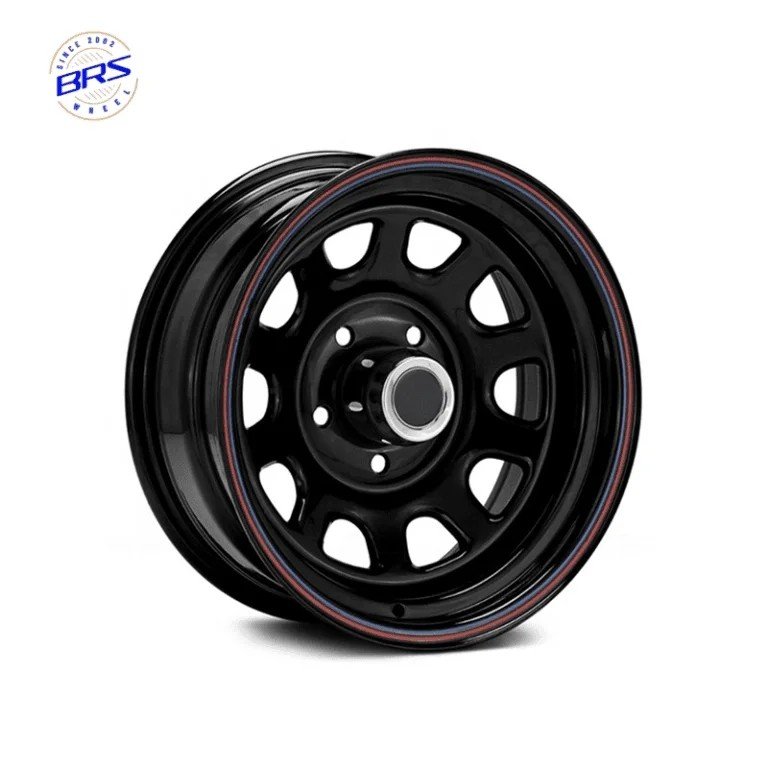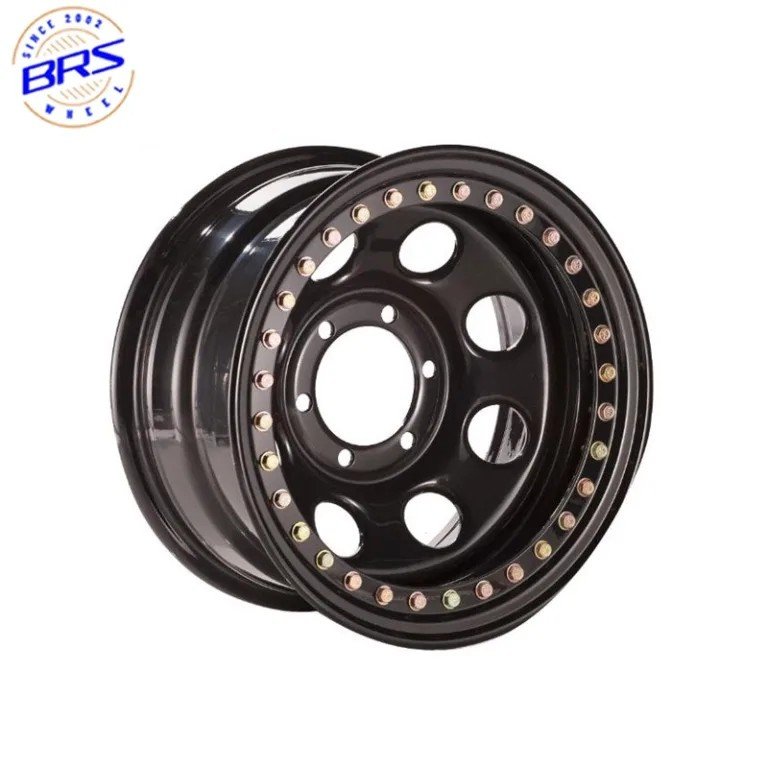


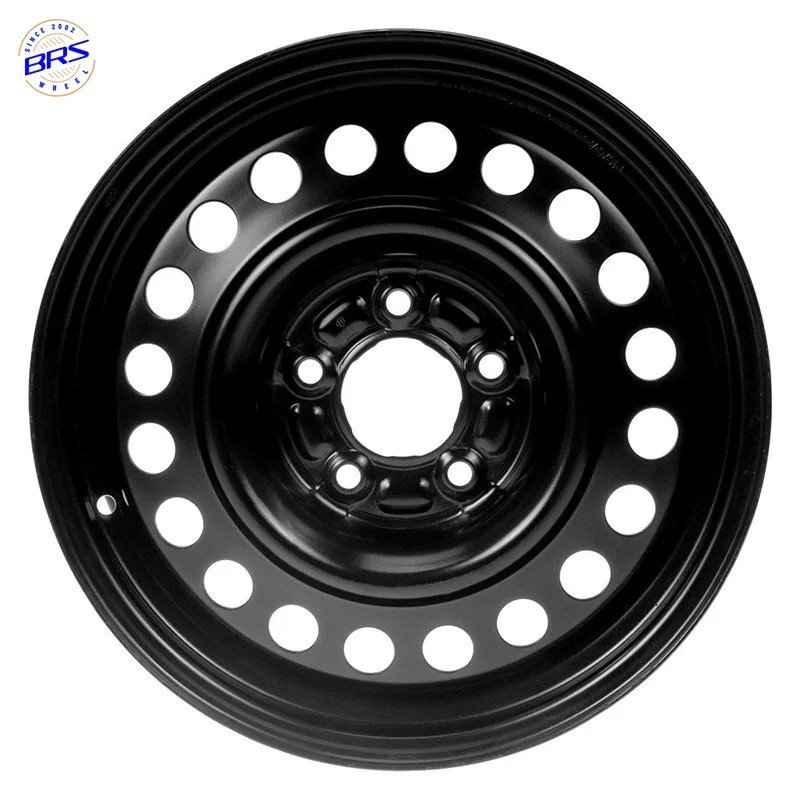
Steel wheels are the industry standard for semi trucks and heavy commercial vehicles, and for good reason. They deliver exceptional load capacity, impact resistance, low upfront cost and easy field repairability, making them the most practical choice for heavy-haul, construction and vocational work. While aluminum wheels are preferred for weight-sensitive long-haul routes, steel remains the go-to option for fleets that prioritize toughness and low operating costs.
Key Takeaways
- Steel wheels handle heavy payloads and rough terrain far better than standard aluminum wheels.
- They cost significantly less upfront and are cheaper to repair, reducing total fleet operating costs.
- Bent steel rims can often be straightened and returned to service, unlike cracked aluminum wheels that require replacement.
- Dually steel wheels distribute weight evenly across multiple tires for improved stability on job sites and uneven ground.
- All quality steel wheels meet industry load rating and safety standards when matched to your truck’s gross axle weight rating.
Core Advantages of Steel Wheels for Commercial Use
1. Heavy-Duty Load Capacity
Load rating is the most critical factor for commercial wheel selection. Steel construction delivers the structural rigidity to safely support heavy payloads while maintaining consistent tire alignment and pressure, which reduces uneven tire wear over time.
Pressed steel wheels handle most standard vocational and hauling jobs, while forged steel wheels offer even higher strength for the most severe-duty applications. All quality steel wheels are engineered to meet or exceed a vehicle’s gross axle weight rating (GAWR) for safe, compliant operation.
2. Superior Impact & Damage Resistance
On construction sites, gravel yards and curbed city streets, steel wheels outperform aluminum in damage tolerance. Steel bends on hard impact rather than cracking, which preserves the tire bead and air seal. A hard pothole or curb strike that would crack an aluminum rim and take a truck out of service will often only bend a steel wheel, with no immediate downtime.
For fleets that measure profitability by uptime hours, this impact resilience is one of the biggest advantages of steel construction.
3. Enhanced Stability with Dually Configurations
For heavy-duty dual-rear-wheel trucks, steel dually wheels are the practical standard. Spreading weight across four rear tires reduces trailer sway, improves traction on loose gravel and uneven ground, and delivers more predictable handling under heavy load. This stability is especially valuable for vocational and construction fleets that operate on unpaved job sites.
4. Simple, Low-Cost Repairability
A bent or dented steel wheel can almost always be repaired instead of replaced. Technicians straighten bent rims on a stand with large wrenches, working the metal slowly back into shape. In most cases, straightening costs $50 or less; small cracks can be welded for $50–$100. If damage is too severe, a replacement steel wheel typically only costs $40–$50.
Routine maintenance further extends service life. Zinc-rich primer under powder coating provides baseline corrosion protection, and regular hub inspections help catch early wear. Coastal or winter-salt routes will accelerate corrosion, so more frequent checks are recommended.
Steel vs. Aluminum Truck Wheels
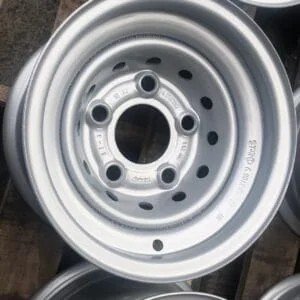
| Factor | Steel Wheels | Aluminum Wheels |
|---|---|---|
| Load capacity | Very high, ideal for severe duty | Good, but less impact-resistant |
| Impact resistance | Bends instead of cracking | Prone to cracking on hard impacts |
| Upfront cost | Low | 2–3x more expensive |
| Repairability | Easy and cheap to straighten | Usually must be replaced if damaged |
| Weight | Heavier (~29 lbs more per wheel) | Lighter, improves fuel economy |
| Best for | Construction, vocational, heavy haul, job sites | Long-haul, weight-sensitive fleets |
Cost & Safety Benefits for Commercial Fleets
Lower Total Operating Costs
Steel wheels have a far lower per-unit purchase price than comparable aluminum models. Combined with cheap, fast repairs and widely available spare parts, they deliver a very low total cost of ownership for high-wear fleets. For vocational and construction operations where wheel damage is common, the repair savings alone can justify choosing steel over aluminum.
Safety & Regulatory Compliance
Quality steel wheels are engineered with a safety margin above their rated load capacity, and all reputable models are certified to meet industry standards. For example, BRS — a leading Chinese steel wheel manufacturer in operation since 2002 — produces 4 million wheel sets annually with IATF 16949 quality certification. Their 6–18 inch steel rim lineup includes custom options with 45–60 day lead times, built to meet all heavy-duty load and safety requirements.
When to Choose Aluminum Instead
Steel is not always the better choice. For weight-sensitive long-haul fleets, the ~29 lb per wheel weight savings of forged aluminum wheels can deliver measurable fuel economy gains that justify the higher upfront cost over time. There is no universally superior option — the right choice depends on your primary use case.
FAQ
Can a bent steel truck wheel be repaired and put back in service?
Yes, in most cases. A bent or dented steel rim can usually be straightened for around $50, and small cracks can be welded for $50–$100. Deep gouges or severe structural damage still require replacement. Easy repairability is one of the biggest advantages of steel for commercial fleets, as it reduces downtime.
Do dually steel wheels improve stability on rough ground?
Yes. Dually configurations spread weight across four rear tires instead of two, reducing trailer sway and improving traction on loose gravel and uneven job sites. Fleets running vocational and construction trucks consistently report more predictable handling with steel dually setups.
How much weight do aluminum wheels save vs. steel?
A comparable forged aluminum severe-service wheel weighs roughly 29 lbs less per wheel than an equivalent steel wheel. This weight savings can improve fuel economy, which is why weight-sensitive long-haul fleets often choose aluminum.
Which fleets benefit most from steel dually wheels?
Severe-duty, vocational and construction fleets see the biggest value from steel dually wheels. Their low upfront cost, impact resistance and easy repair make them ideal for job site use. Long-haul fleets focused on fuel efficiency typically prefer aluminum instead.
Do steel wheels meet commercial load and safety standards?
Yes, when properly matched to your truck’s axle weight rating. Reputable manufacturers certify their wheels to standards such as IATF 16949. Quality steel wheels are engineered with a safety margin above rated load capacity to ensure compliant, reliable operation.