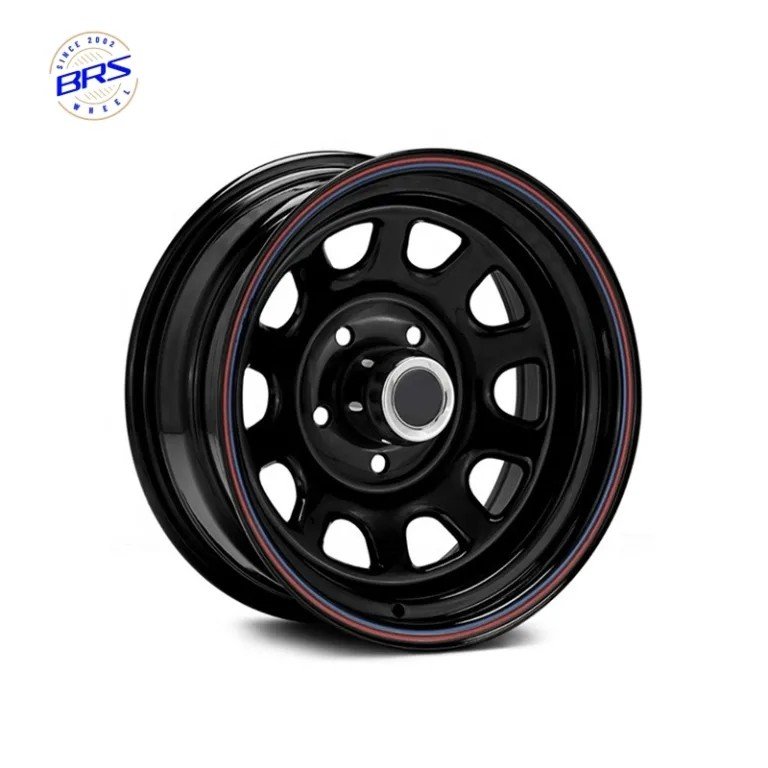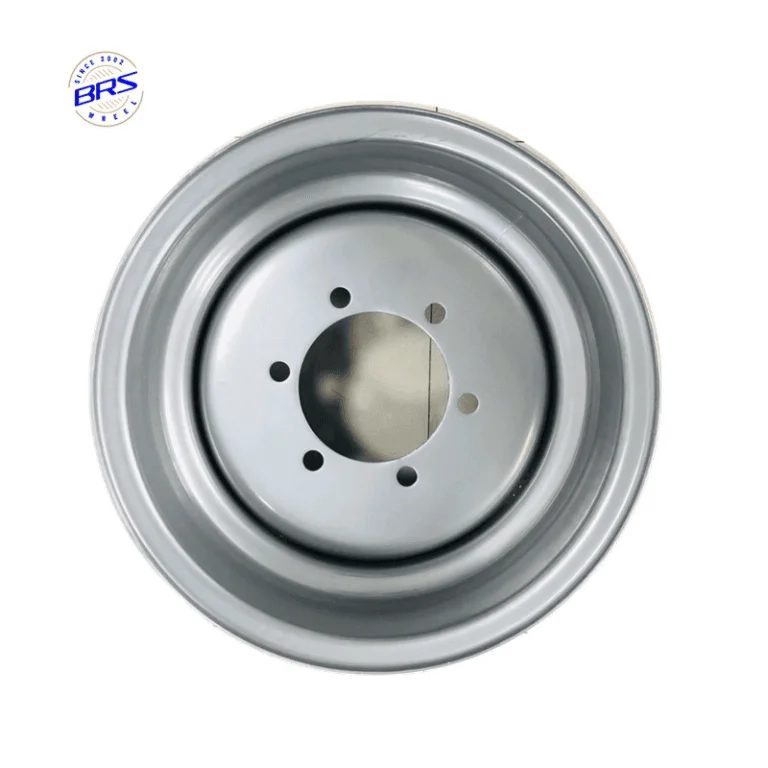
Steel wheels are manufactured through a sequential, multi-stage industrial process: high-grade steel is cut into blanks, formed into separate disc and rim components, welded into a single unit, finished with protective coatings, and rigorously tested for strength and safety before packaging.
Each step builds on the last: precise forming, consistent welding, and durable coatings combine to create wheels built for heavy loads and years of road use. The split design — forming the disc and rim separately before joining — lets engineers optimize each part for its specific function.
Key Takeaways
- Steel wheel production starts with high-grade steel alloy, cut into separate blanks for the center disc and outer rim.
- The flat center disc is formed via stamping; the rounded tire-holding rim is shaped via rolling or spinning processes.
- Welding joins the two components into one solid unit, with automated robotic systems for consistent, strong seams.
- After assembly, wheels are cleaned and coated to resist rust, corrosion, and road wear.
- Every finished wheel undergoes strength and safety testing before final inspection and packaging.
Step 1: Raw Materials & Cutting
High-Grade Steel Selection
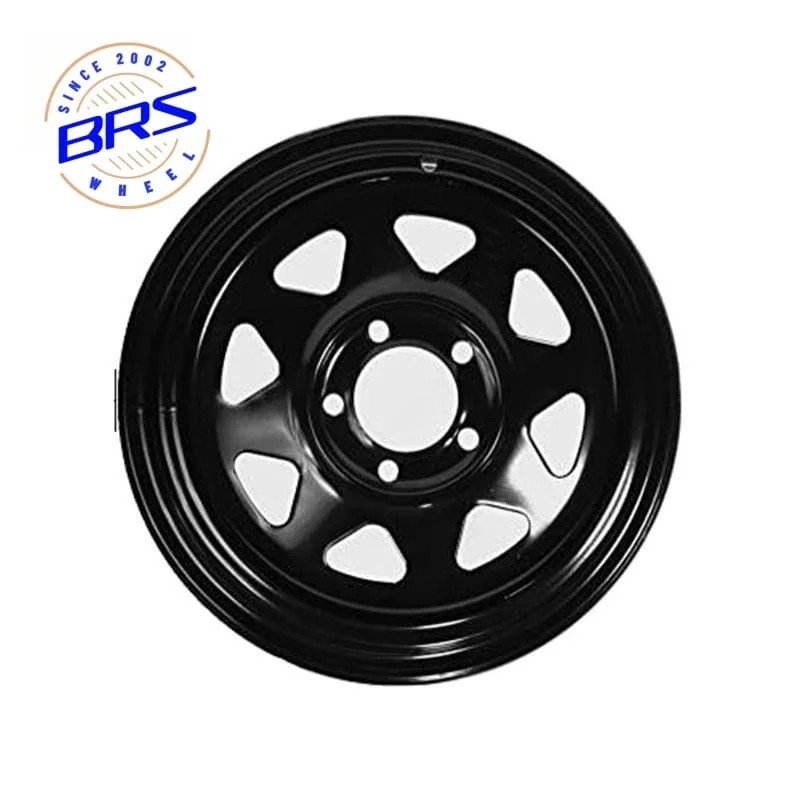
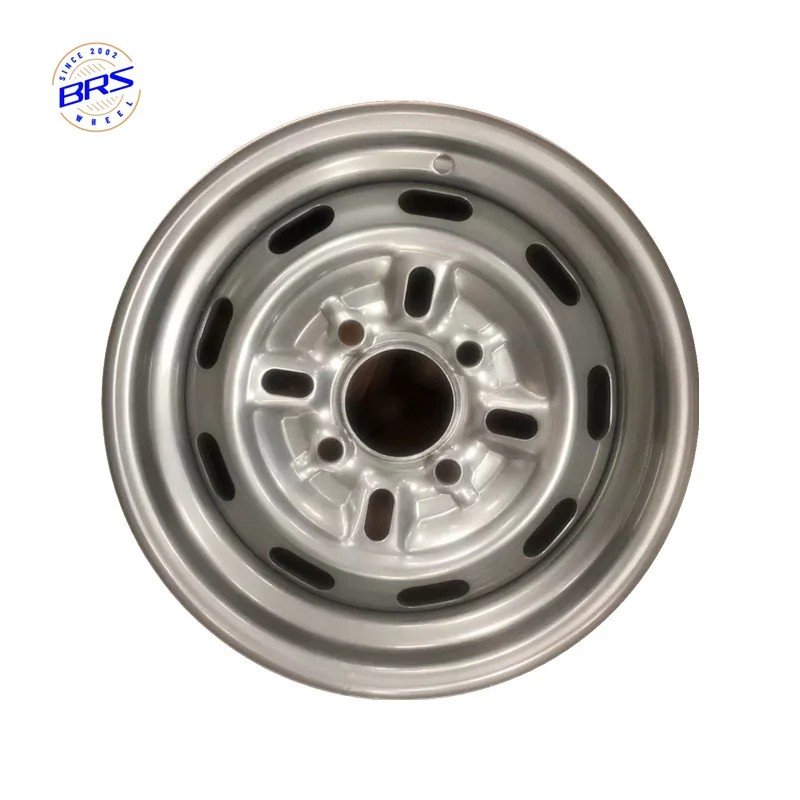
Every steel wheel begins with high-grade carbon steel alloy, selected for its balance of hardness, formability, and load-bearing strength. Carbon content and alloying elements are tuned to match the application: trailer wheels, off-road wheels, and passenger car wheels each use grades optimized for their specific stress profiles.
For example, BRS produces steel rims from 6–18 inches for passenger cars, trucks, trailers, ATVs, and off-road vehicles, with steel grades matched to each use case.
Cutting & Blanking
Large steel coils or plates are fed into automated cutting lines, where shears or presses slice them into flat blanks sized precisely for either the disc or rim. Tight tolerances ensure proper forming later, while minimizing material waste. The cut blanks then move to forming stations.
Step 2: Forming the Disc & Rim
A steel wheel has two core components, each formed with a dedicated process for optimal geometry:
- Disc: The flat center section that bolts to the vehicle hub.
- Rim: The rounded barrel that holds the tire bead.
Stamping the Disc
The flat disc blank is formed via heavy press stamping. A die presses the metal into the disc profile, creating the bolt circle, hub area, and curved transition sections. Progressive dies can add multiple features in a single pass to speed up production.
The stamping process also work-hardens the steel, adding stiffness to the finished part. Operators inspect each disc for cracks, wrinkles, and dimensional accuracy before it moves on.
Rolling & Spinning the Rim
Rim forming uses one of two processes, depending on the rim design:
- Rolling: Flat steel strip is gradually bent into a cylinder by rollers, then welded closed. Profile rollers then shape the barrel into its final cross-section, creating the tire bead flanges and drop center.
- Spinning: A rotating blank is pressed against a form block, forcing material outward to match the profile. This works best for wider barrels and complex rim profiles.
Both processes produce rims with uniform wall thickness around the full circumference.
Step 3: Welding & Assembly
Welding joins the formed disc and rim into one solid, load-bearing unit.
Welding Process
First, the disc is fitted inside the rim and clamped securely for a tight, even seam. Manufacturers use automated welding systems for consistent, high-strength joints:
- Four-head combination welders: Complete all four weld seams in a single pass for high speed, minimal deformation, and strong weld integrity.
- Submerged arc welders: Guide the torch along the joint for deep, consistent penetration on heavy-duty wheels.
High-volume lines use robotic welders to maintain a consistent torch angle and travel speed across every unit. As a steel wheel manufacturer, BRS uses over 10 robots across its production lines to ensure uniform weld beads and repeatable quality.
Weld Quality Inspection
Welds are inspected immediately for cracks, porosity, and incomplete fusion, and verified for correct positioning around the full circumference. Sample wheels also undergo load and stress testing to confirm the joint meets safety standards.
Step 4: Surface Treatment & Protective Coating
After welding, the complete wheel is treated as a single assembly to protect against rust and wear, and deliver the final finish.
Cleaning & Pretreatment
Before coating, all oils, grease, mill scale, and shop dirt are removed:
- Degreasing per SSPC-SP 1 standards.
- Low-pressure freshwater rinse to remove soluble salts.
- Mechanical cleaning (blasting, grinding, or sanding) to remove rust and old coatings, and feather edges for better coating adhesion.
- Optional conversion coating (iron or zinc phosphate) to boost corrosion resistance.
Protective Coating Options
Coating systems are matched to the wheel’s operating environment:
| Coating Type | Key Characteristics |
|---|---|
| Polyurethane | Weather, abrasion, and corrosion resistant; stainless-steel leafing pigment |
| Epoxy | Hard, durable metallic finish; catalyzed system |
| Powder coating | Most durable option; multi-layer primer/color/clear coat systems for long corrosion life |
Multi-layer epoxy-primer systems can reach roughly 3,000 hours of salt-spray resistance. Powder coating delivers excellent chip resistance and long-term durability for road use.
Step 5: Quality Control & Packaging
Strength & Safety Testing
Every wheel must pass testing to validate real-world performance:
- Load tests: Stress the wheel beyond normal service limits.
- Impact tests: Drop weights onto the rim to check for cracking.
- Fatigue tests: Spin the wheel through thousands of cycles to simulate years of driving.
Quality systems like IATF 16949 certification (automotive quality management standard) ensure documented procedures, traceable records, and regular audits across the full production process.
Final Inspection & Shipping
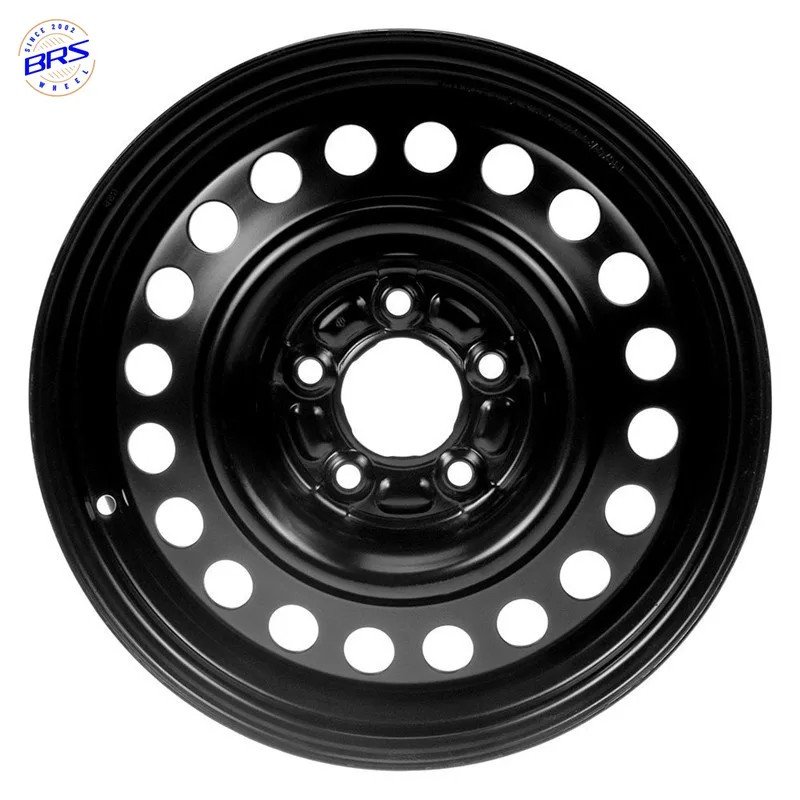
A final visual inspection checks for paint defects, verifies bolt pattern, center bore, and valve hole position, and confirms overall roundness. Defective units are pulled for review.
Passing wheels are stacked with protective separators to prevent scratches, then wrapped or boxed for shipping. Typical lead times are 45–60 days, depending on order size and customization.
FAQ
What steel grades do manufacturers use for wheels?
Manufacturers select steel grades matched to each application. Carbon content and alloying elements balance hardness and formability to suit the specific stresses of trailer, passenger car, or off-road use.
Why are the disc and rim formed separately?
Each part requires a different shaping process. Stamping creates the flat disc with its bolt circle; rolling or spinning forms the rounded rim barrel. Separate forming lets engineers optimize each component’s geometry before welding.
How do manufacturers check weld quality?
Inspectors visually check for cracks, porosity, and incomplete fusion immediately after welding. Sample wheels also undergo load and stress testing to confirm joints meet safety standards. Automated robotic welding ensures consistent seam quality across every unit.
How long does a protective coating last?
Coating life varies by system. Multi-layer epoxy-primer systems reach roughly 3,000 hours of salt-spray resistance. Multi-layer powder coating systems deliver excellent long-term corrosion resistance for road use.
How long does a steel wheel order take to ship?
Typical lead times are 45–60 days, depending on order size and customization. Wheels are packed with protective separators to protect the finish during shipping, so they arrive ready to mount.