
Oui, jantes en acier sont souvent plus adaptées au tout-terrain extrême, notamment au rock crawling, aux sentiers boueux et au overlanding en zones isolées, où la résistance aux chocs et la réparabilité sur piste comptent le plus. Cependant, pour la conduite rapide dans le désert et l'usage quotidien sur route, des jantes en alliage d'aluminium plus légères peuvent constituer le meilleur choix.
Le choix entre jantes en acier et jantes en alliage dépend de votre terrain, de votre style de conduite et de vos priorités. Les jantes en acier sont plus lourdes mais résistent aux impacts sévères et sont souvent plus faciles à réparer si elles se déforment sur la piste. Les jantes en alliage d'aluminium réduisent le poids non suspendu et améliorent la tenue de route, mais elles peuvent se fissurer sous de violents impacts et sont généralement plus difficiles à réparer en conditions isolées.
Ce guide compare les jantes en acier et en alliage pour un usage tout-terrain et explique quelle option convient le mieux aux différentes conditions de conduite, aidant les acheteurs à évaluer les produits et à choisir un fabricant fiable fabricant de jantes.
Points clés à retenir
- Les jantes en acier se déforment sous les impacts lourds au lieu de se fissurer comme l'aluminium moulé, ce qui les rend bien plus durables sur les sentiers rocailleux.
- Un bord de jante en acier déformé peut être remis en forme au marteau sur la piste pour asseoir à nouveau le talon du pneu — une réparation impossible avec une jante en alliage cassée.
- Les jantes en acier, plus lourdes, abaissent le centre de gravité du véhicule pour une meilleure stabilité dans les montées raides, mais ajoutent de la masse non suspendue qui nuit à la consommation de carburant et à la réactivité de la suspension.
- Les jantes en acier constituent le choix le plus fiable pour le rock crawling et le overlanding en zones isolées ; les jantes en alliage sont plus performantes pour la conduite rapide dans le désert.
Jantes en acier vs en alliage : comparaison des performances tout-terrain essentielles
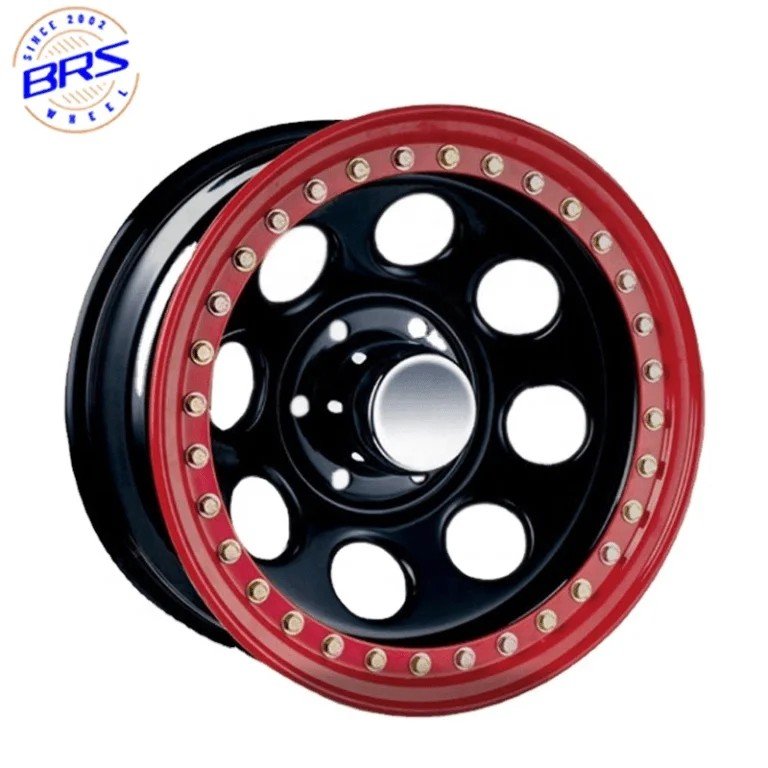
Résistance aux chocs et durabilité
Les propriétés des matériaux déterminent la manière dont chaque jante encaisse les chocs des rochers, des ornières et des obstacles de la piste.
- Acier: hautement malléable et ductile. Sous un impact lourd, l'acier se déforme au lieu de se briser. Le métal absorbe le choc sans défaillance catastrophique, de sorte que la jante retiendra généralement encore l'air après un choc violent.
- Alliage d'aluminium moulé: Rigides et fragiles. Les impacts violents provoquent couramment des fissures, des éclats ou une rupture complète. Une jante en alliage fissurée perd immédiatement de l'air et ne peut plus être utilisée en toute sécurité.
| Propriété | Jantes en acier | Jantes en alliage moulé |
|---|---|---|
| Réaction aux impacts lourds | Se déforme et se plie | Se fissure ou se brise |
| Comportement du matériau | Grande malléabilité / ductilité | Grande rigidité / rupture fragile |
| Mode de défaillance | Déformation progressive (roulable encore) | Défaillance soudaine et catastrophique |
Pour le franchissement rocheux intensif où les chocs sur la jante sont fréquents, la capacité de l'acier à se déformer au lieu de se briser constitue un énorme avantage de fiabilité.
Réparabilité sur piste
C'est le plus grand avantage des jantes acier pour le tout-terrain en zone isolée. Si vous cabossez le bord extérieur d'une jante acier sur un rocher, vous pouvez généralement le remettre en forme avec un marteau lourd ou une petite massette. Remettre le bord en forme repositionne le talon du pneu et arrête les fuites d'air, vous permettant de terminer votre voyage sans jante de rechange.
Les jantes en alliage déformées ne peuvent pas être réparées de cette manière. Marteler une jante en aluminium moulé provoquera presque toujours une fissure complète, vous laissant bloqué. Pour les voyages d'overlanding loin des ateliers de réparation, cette capacité de réparation sur piste constitue un avantage de sécurité majeur.
Poids et masse non suspendue
La masse non suspendue — le poids situé sous les ressorts de suspension — affecte directement l'efficacité de votre suspension sur terrain accidenté.
- Les jantes acier sont plus lourdes: généralement 18 à 26 lbs de plus par jeu de quatre par rapport à des jantes en alliage équivalentes. Ce poids tournant supplémentaire ralentit l'accélération et le freinage, réduit la réactivité de la suspension sur les chocs rapides et diminue la consommation de carburant d'environ 1 à 2 mpg.
- Le compromis de stabilité: Le poids supplémentaire est positionné bas sur le véhicule, abaissant le centre de gravité global. Cela améliore la stabilité latérale dans les pentes fortes déversées et les ornières profondes, particulièrement à faible vitesse de franchissement.
Pour le franchissement rocheux technique à basse vitesse, le bénéfice de stabilité l'emporte souvent sur la pénalité de performance. Pour la conduite à haute vitesse dans le désert, des jantes en alliage plus légères offrent un bien meilleur contrôle de la suspension.
Traction et rétention du talon
Lorsqu'on dégonfle les pneus pour améliorer la traction tout-terrain, jantes tout-terrain en acier présentent un avantage pratique :
- Ils sont largement compatibles avec les bagues de beadlock, qui fixent fermement le talon du pneu à la jante à de très basses pressions. Cela empêche le pneu de glisser ou de se déloger de la jante lors de fortes contraintes latérales.
- Le siège de talon plus rigide et plus constant des jantes acier maintient la pression de manière fiable, même après de légers impacts.
Quand les jantes acier sont le meilleur choix
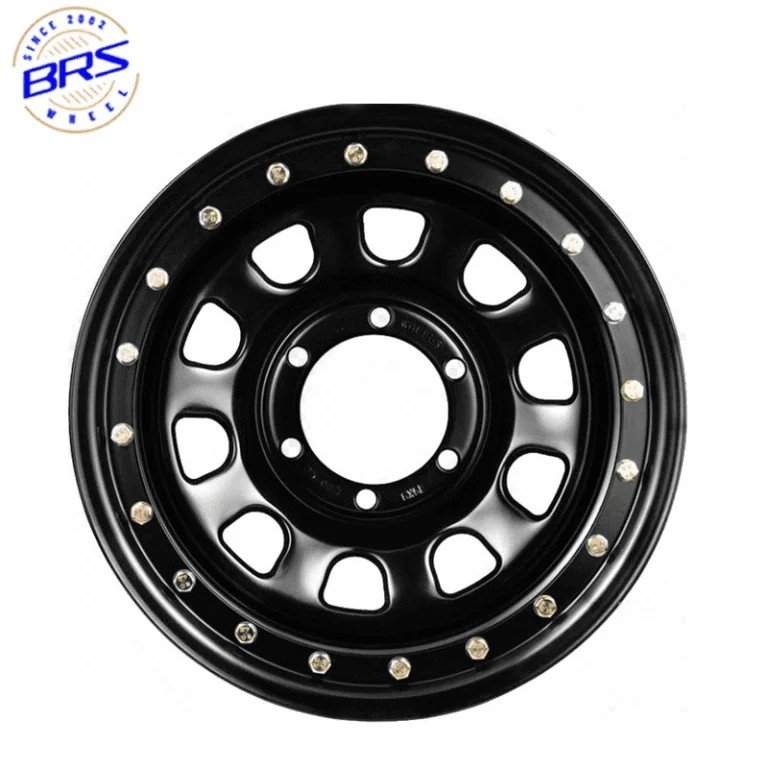
Les jantes acier s'imposent dans ces scénarios tout-terrain :
- Franchissement rocheux extrême: les chocs répétés de la jante contre les rochers font courir un risque élevé de rupture aux jantes alliage fragiles. L'acier, lui, se déforme et peut être réparé sur place.
- Voyages overlanding isolés et expéditions en pleine nature: lorsque vous êtes à des kilomètres de toute assistance, pouvoir réparer une jante déformée avec des outils de base est un élément de sécurité essentiel.
- Constructions tout-terrain à petit budget: les jantes acier coûtent nettement moins cher à l'achat que des jantes tout-terrain alliage de qualité, et leur remplacement est économique en cas de dommage.
Quand les jantes en alliage sont préférables
Les jantes en alliage d'aluminium sont le meilleur choix dans les cas suivants :
- Conduite rapide dans le désert et les dunes: La masse non suspendue plus légère permet à la suspension de réagir plus rapidement sur les bosses et les secousses, maintenant les pneus en contact avec le sol pour une meilleure traction et un meilleur contrôle.
- Véhicules à usage quotidien: Si votre camion est principalement utilisé sur route avec un peu de tout-terrain occasionnel, les jantes en alliage offrent une meilleure économie de carburant, moins de vibrations et un plus large choix de styles.
- Constructions sensibles au poids: Pour les véhicules d'expédition transportant déjà un équipement lourd, la réduction du poids rotatif aide à compenser la charge.
FAQ
Peut-on vraiment réparer une roue en acier déformée sur le sentier ?
Oui. Un bord de jante extérieur déformé peut généralement être martelé avec un marteau lourd ou une petite masse. Remodeler le bord permet de replacer le talon du pneu et de stopper les fuites d'air, suffisant pour rejoindre une route goudronnée. Ce n'est pas une réparation définitive, mais cela vous permet de rentrer chez vous en toute sécurité.
Pourquoi les roues en aluminium se fissurent-elles si facilement en tout-terrain ?
La plupart des roues en alliage tout-terrain sont en aluminium moulé, rigide mais fragile. Sous des impacts violents et brusques de rochers, le métal ne peut pas se déformer — il se fracture. Une roue en alliage fissurée perd immédiatement de l'air et ne peut pas être réparée en toute sécurité sur le sentier.
Quel est l'écart de poids entre les jantes en acier et les jantes en alliage ?
En moyenne, un jeu de quatre jantes tout-terrain en acier pèse 8 à 12 kg de plus qu'un jeu équivalent de jantes en alliage moulé. Ce poids rotatif supplémentaire réduit généralement la consommation de carburant d'environ 1 à 2 mpg et ralentit légèrement l'accélération et le freinage.
Les roues en acier rouillent-elles en tout-terrain ?
Oui, si le revêtement de protection est endommagé. Les éclats et rayures causés par les rochers exposent l'acier nu à l'humidité et à la boue, provoquant la rouille avec le temps. Un revêtement par poudrage de qualité et des retouches régulières des éclats préviendront la rouille pendant de nombreuses années, même dans des conditions humides et boueuses.
Peut-on installer des beadlocks sur des jantes en acier ?
Oui. Les jantes en acier sont le choix le plus courant et le plus fiable pour les conversions beadlock. Le métal se soude et se déforme de manière prévisible, créant un serrage solide et constant du talon du pneu. Les beadlocks permettent de rouler à une pression de pneu très basse pour une traction maximale sans que le pneu ne se déjante de la jante.