
Sí, llantas de acero are often better for hardcore off-roading, especially rock crawling, mud trails, and remote overlanding where impact durability and trail repairability matter most. However, for fast desert driving and daily street use, lighter aluminum alloy rims may be the better choice.
Choosing between steel and alloy rims depends on your terrain, driving style, and priorities. Steel rims are heavier but can withstand severe impacts and are often easier to repair if bent on the trail. Aluminum alloy rims reduce unsprung weight and improve handling, but they can crack under severe impacts and are generally harder to repair in remote conditions.
This guide compares steel and alloy rims for off-road use and explains which option is best for different driving conditions, helping buyers evaluate products and choose a reliable fabricante de llantas.
Puntos clave
- Steel rims bend under heavy impact instead of cracking like cast aluminum, making them far more durable on rocky trails.
- Bent steel lips can be hammered back into shape on the trail to reseat the tire bead — a repair that’s impossible with broken alloy rims.
- Heavier steel rims lower a vehicle’s center of gravity for better stability on steep climbs, but add unsprung mass that hurts fuel economy and suspension response.
- Steel rims are the most reliable choice for rock crawling and remote overlanding; alloy rims perform better for fast desert driving.
Steel vs. Alloy Rims: Core Off-Road Performance Comparison
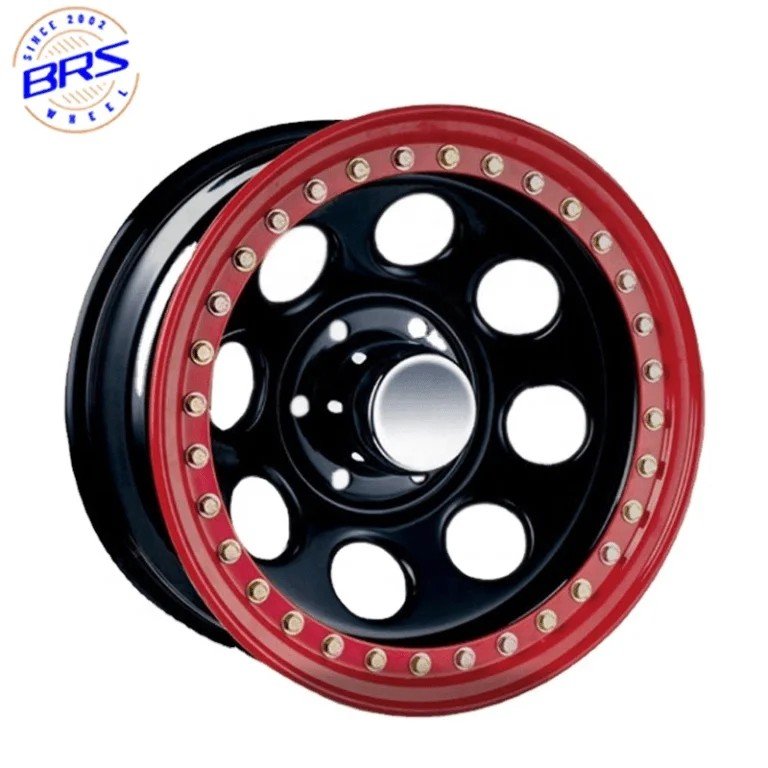
Impact Resistance & Durability
Material properties define how each rim handles hard hits from rocks, ruts and trail obstacles.
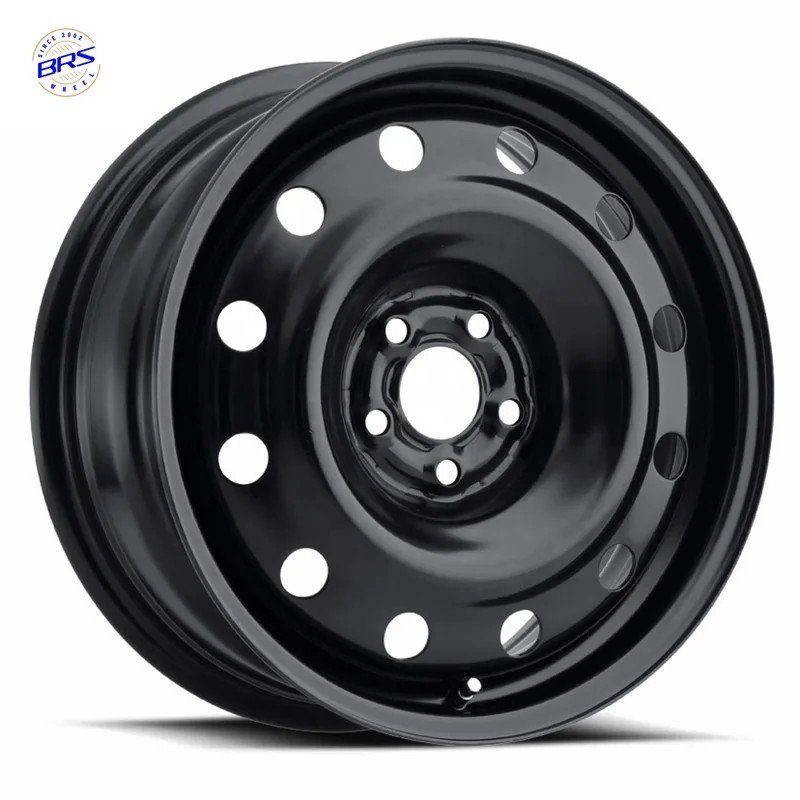
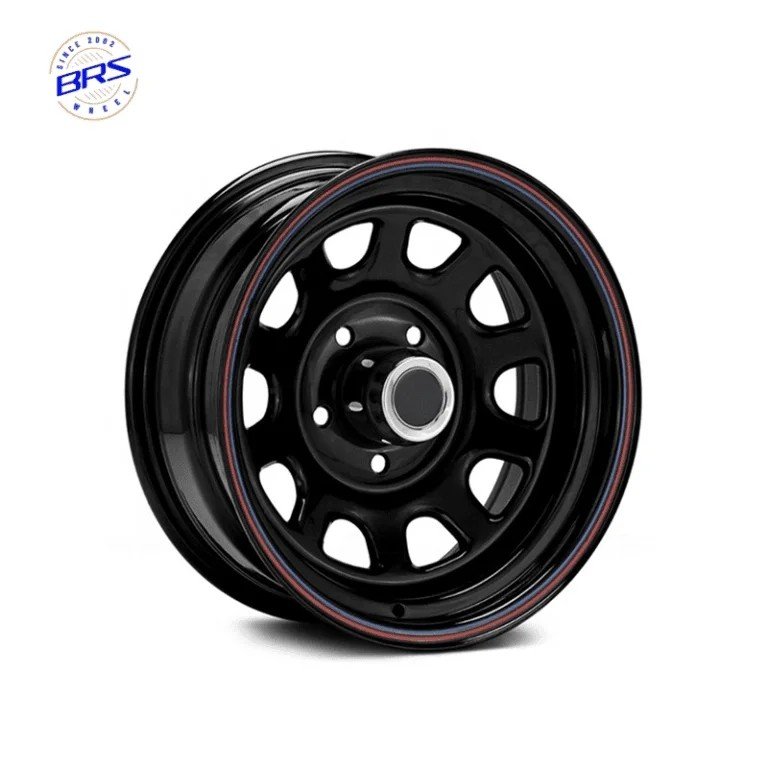
- Acero: Highly malleable and ductile. Under heavy impact, steel bends rather than fractures. The metal absorbs shock without catastrophic failure, so the rim will usually still hold air after a hard hit.
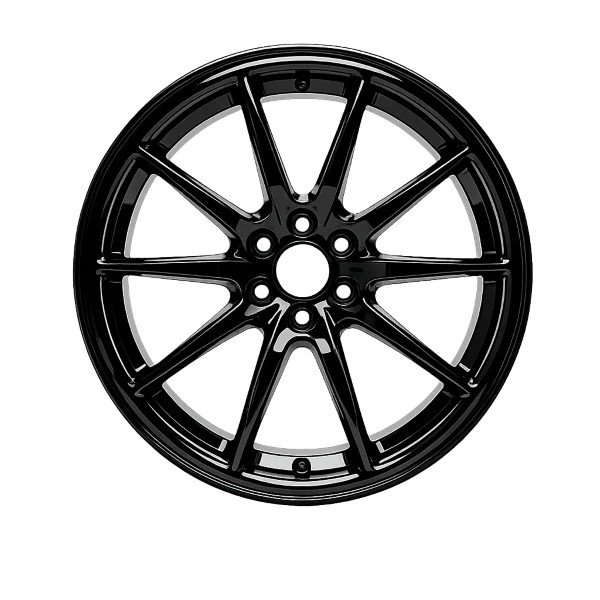
- Cast aluminum alloy: Rigid and brittle. Sharp impacts commonly cause cracks, chips or full shattering. A cracked alloy rim loses air immediately and cannot be safely driven on.
| Property | Llantas de acero | Cast Alloy rims |
|---|---|---|
| Reaction to heavy impact | Bends and deforms | Cracks or shatters |
| Material behavior | High malleability / ductility | High rigidity / brittle fracture |
| Failure mode | Gradual bend (still drivable) | Sudden catastrophic failure |
For heavy rock crawling where rim strikes are common, steel’s ability to bend instead of break is a massive reliability advantage.
Trail Repairability
This is the single biggest advantage of steel rims for remote off-roading. If you dent the outer lip of a steel rim on a rock, you can usually hammer it back into shape with a heavy hammer or small sledge. Reshaping the lip reseats the tire bead and stops air leaks, letting you finish your trip without a spare rim.
Bent alloy rims cannot be repaired this way. Hammering a cast aluminum rim will almost always cause it to crack completely, leaving you stranded. For overlanding trips far from repair shops, this on-trail fix capability is a major safety benefit.
Weight & Unsprung Mass
Unsprung mass — weight below the suspension springs — directly affects how well your suspension works over rough terrain.
- Steel rims are heavier: typically 18–26 lbs heavier per set of four compared to equivalent alloy rims. This extra rotating weight makes acceleration and braking slower, reduces suspension responsiveness over fast bumps, and lowers fuel economy by roughly 1–2 mpg.
- The stability tradeoff: The extra weight sits low on the vehicle, lowering the overall center of gravity. This improves side-to-side stability on steep off-camber climbs and deep ruts, especially at slow crawling speeds.
For slow technical rock crawling, the stability benefit often outweighs the performance penalty. For high-speed desert driving, lighter alloy rims deliver much better suspension control.
Traction & Bead Retention
When airing down tires for off-road traction, llantas todoterreno de acero have a practical advantage:
- They are widely compatible with beadlock rings, which clamp the tire bead firmly to the rim at very low air pressure. This prevents the tire from slipping or popping off the rim during hard side loads.
- The stiffer, more consistent bead seat of steel rims holds pressure reliably even after minor impacts.
When Steel Rims Are the Better Choice
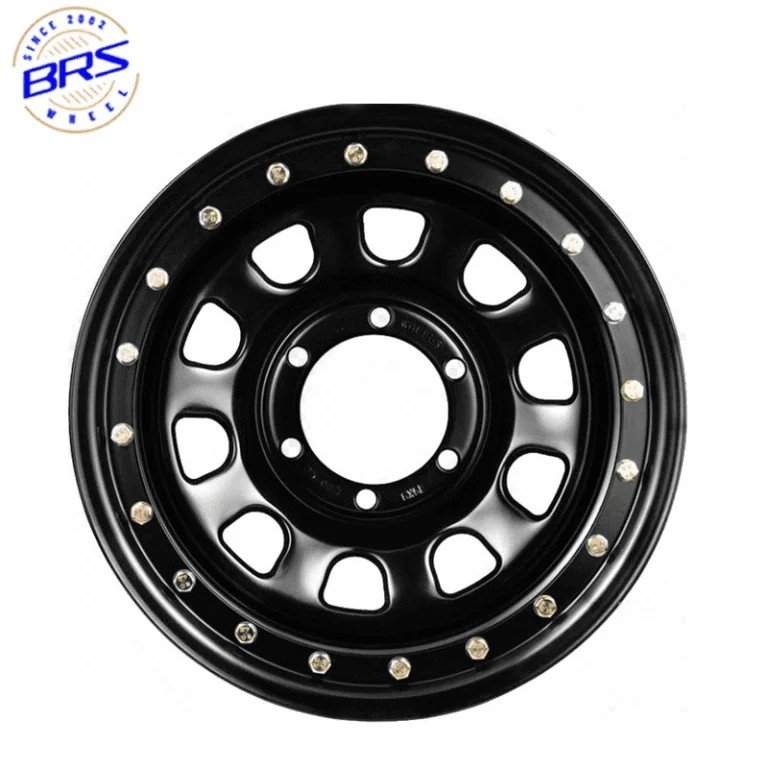
Steel rims win for these off-road scenarios:
- Hardcore rock crawling: Constant rim strikes on boulders make brittle alloy rims a high risk of failure. Steel bends and can be fixed on site.
- Remote overlanding & backcountry trips: When you’re miles from help, being able to repair a bent rim with basic tools is a critical safety feature.
- Budget off-road builds: Steel rims cost significantly less upfront than quality alloy off-road rims, and replacement is cheap if damage does occur.
When Alloy Rims Are Better
Aluminum alloy rims are the better pick for these use cases:
- Fast desert & dune driving: Lighter unsprung mass lets the suspension cycle faster over rapid bumps and whoops, keeping the tires in contact with the ground for better traction and control.
- Daily driven vehicles: If your truck sees mostly street use with occasional off-roading, alloy rims deliver better fuel economy, less road vibration and a wider range of style options.
- Weight-sensitive builds: For overland rigs already carrying heavy gear, reducing rotating weight helps offset cargo load.
Preguntas frecuentes
Can you really fix a bent steel wheel on the trail?
Yes. A bent outer rim lip can usually be hammered back into shape with a heavy hammer or small sledge. Reshaping the lip reseats the tire bead and stops air leaks, enough to get you back to pavement. This is not a permanent fix, but it gets you home safely.
Why do aluminum wheels crack so easily off-road?
Most off-road alloy wheels are cast aluminum, which is rigid but brittle. Under sharp, hard impacts from rocks, the metal cannot flex — it fractures instead. A cracked alloy wheel loses air immediately and cannot be safely repaired on the trail.
How much heavier are steel rims than alloy rims?
On average, a set of four steel off-road rims is 18–26 lbs heavier than an equivalent set of cast alloy rims. This extra rotating weight typically reduces fuel economy by about 1–2 mpg and slightly slows acceleration and braking.
Do steel wheels rust off-road?
Yes, if the protective coating gets damaged. Chips and scratches from rocks expose bare steel to moisture and mud, leading to rust over time. Quality powder coating and regular touch-up of chip damage will prevent rust for many years, even in wet and muddy conditions.
Can you put beadlocks on steel rims?
Yes. Steel rims are the most common and reliable choice for beadlock conversions. The metal welds and deforms predictably, creating a strong, consistent clamp for the tire bead. Beadlocks let you run very low tire pressure for maximum traction without the tire popping off the rim.

Experto en la fabricación de llantas de acero
Pioneros en el sector de la fabricación de llantas para automóviles