

Choisir la taille de jante idéale signifie équilibrer sécurité, performances, confort de conduite et conformité légale — et pas seulement choisir un style esthétique. Une taille inadaptée ou un mauvais montage peut dégrader la précision de direction, réduire les performances de freinage, nuire à la consommation de carburant et même créer des risques de défaillance structurelle.
La bonne approche suit trois étapes essentielles : commencez par les spécifications d'origine de votre véhicule, vérifiez les paramètres critiques de montage, puis adaptez les dimensions à vos besoins de conduite. Ce guide explique comment la taille de jante influe sur les performances, quels détails de montage sont les plus importants et comment éviter des erreurs coûteuses et dangereuses.
Points clés à retenir
- Commencez toujours par les spécifications de jantes et de pneus d'origine de votre véhicule, indiquées sur l'étiquette de la portière côté conducteur.
- Faites correspondre les trois paramètres de montage critiques — entraxe (PCD), déport (ET) et alésage central — au moyeu de votre véhicule.
- Des jantes plus grandes augmentent l'inertie de rotation et le poids non suspendu, réduisant l'accélération et le confort de conduite.
- Utilisez un calculateur de dimensionnement jante/pneu pour vérifier le diamètre total et le dégagement avant tout achat.
- Consultez un expert en montage si vous avez un doute, afin d'éviter des problèmes de tenue de route et de sécurité.
Comment la taille de jante affecte les performances du véhicule

Poids non suspendu et inertie de rotation
La taille de la jante modifie deux propriétés physiques clés qui influent sur les performances :
- Poids non suspendu: le poids des composants non supportés par les ressorts de suspension (roues, pneus, freins, moyeux). Une roue en acier typique pèse environ 78 lbs, tandis qu'une roue en alliage d'aluminium de même taille pèse environ 47 lbs. Cette différence de 31 lbs par coin ralentit la réponse de la suspension, car une masse non suspendue plus lourde met plus de temps à franchir les bosses, réduisant le contact et l'adhérence du pneu.
- Inertie rotationnelle: l'inertie augmente avec le carré du diamètre de la roue. Doubler le diamètre rend une roue quatre fois plus difficile à faire tourner. Un test contrôlé sur une VW Golf a montré que le 0 à 60 mph prenait 7,6 secondes avec jantes de 15 pouces, et 7,9 secondes avec des roues 19-inch, en raison de l'inertie accrue nécessitant plus de couple moteur.
Confort, adhérence et économie de carburant
La largeur des roues et le profil des pneus créent également des compromis :
- Des pneus plus larges augmentent la surface de contact pour une meilleure adhérence, mais augmentent aussi la résistance au roulement et réduisent l'efficacité énergétique.
- Des roues plus grandes avec des pneus à profil plus bas transmettent davantage d'imperfections de la route à l'habitacle pour une conduite plus ferme, mais offrent aussi une direction plus précise et une meilleure stabilité en virage.
- Des roues plus lourdes réduisent également l'économie de carburant : un test a révélé que les véhicules équipés de roues en alliage légères consommaient en moyenne 21,5 MPG, contre 21,1 MPG avec des roues en acier de taille identique.
Comment choisir la bonne taille de roue

Étape 1 : commencez par les spécifications d'usine
Chaque véhicule comporte une étiquette sur le montant de la porte conducteur indiquant la taille d'origine des pneus, l'indice de charge, l'indice de vitesse et la pression de gonflage recommandée. Par exemple, le code P215/65R15 95H se décompose comme suit : pneu pour véhicule de tourisme, largeur 215mm, rapport d'aspect 65%, construction radiale, diamètre de jante 15-inch, indice de charge 95, indice de vitesse H.
Ces spécifications d'usine constituent votre référence pour toute modification de taille de roue.
Étape 2 : Vérifier les paramètres de montage critiques
Au-delà du diamètre, trois paramètres incontournables doivent correspondre à votre véhicule :
- Entraxe (PCD): le diamètre du cercle formé par les trous de boulons (par exemple, 5×114,3).
- Décalage: la distance entre la surface de montage du moyeu et le plan central de la roue. Par sécurité, restez dans une plage de 5mm par rapport au déport d'origine ; des modifications de 5 à 10mm peuvent nécessiter des entretoises, et au-delà de 10mm, des modifications d'aile ou des réglages de géométrie sont généralement requis.
- Alésage central: le trou central de la roue doit correspondre exactement au diamètre de votre moyeu. Un écart provoque des vibrations et une usure accélérée.
Utilisez un calculateur de taille de roue et de pneu pour vérifier le diamètre extérieur du pneu — maintenez les modifications dans une plage de 3% afin d'éviter toute interférence avec l'ABS, le contrôle de traction et la précision du compteur de vitesse. Le calculateur indiquera également le dégagement intérieur/extérieur pour vérifier tout contact avec la suspension ou les ailes.
Étape 3 : Adapter à vos besoins de conduite
Adaptez votre choix de jante à l'utilisation de votre véhicule :
- Trajet quotidien: Restez proche des tailles d'origine pour le meilleur équilibre entre confort de conduite, économie de carburant et fiabilité.
- Usage tout-terrain: Choisissez des jantes plus larges avec un déport arrière adapté pour l'adhérence et la durabilité.
- Conduite sportive: Privilégiez des jantes plus légères pour réduire la masse non suspendue et améliorer la réponse de la direction.
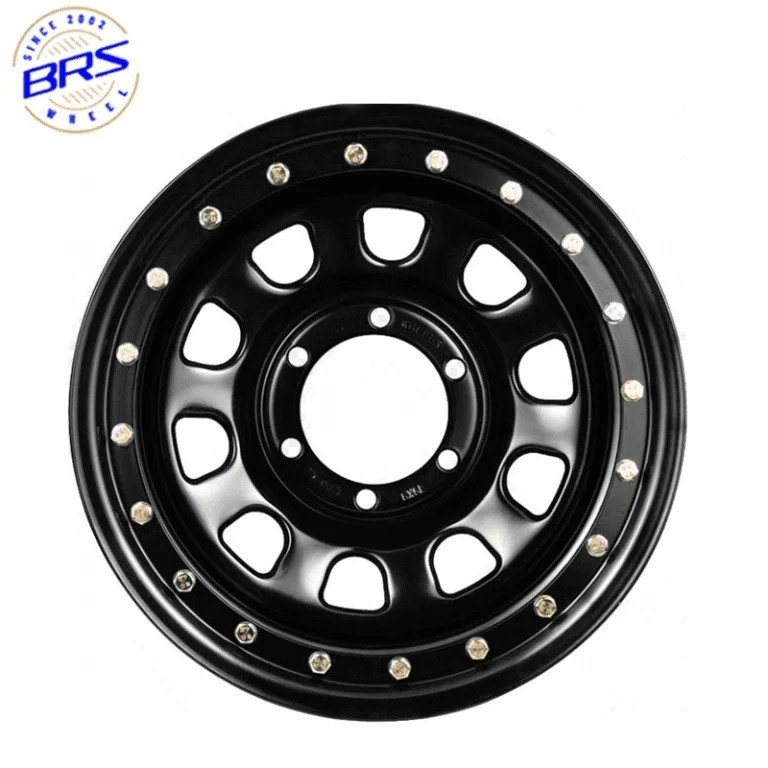
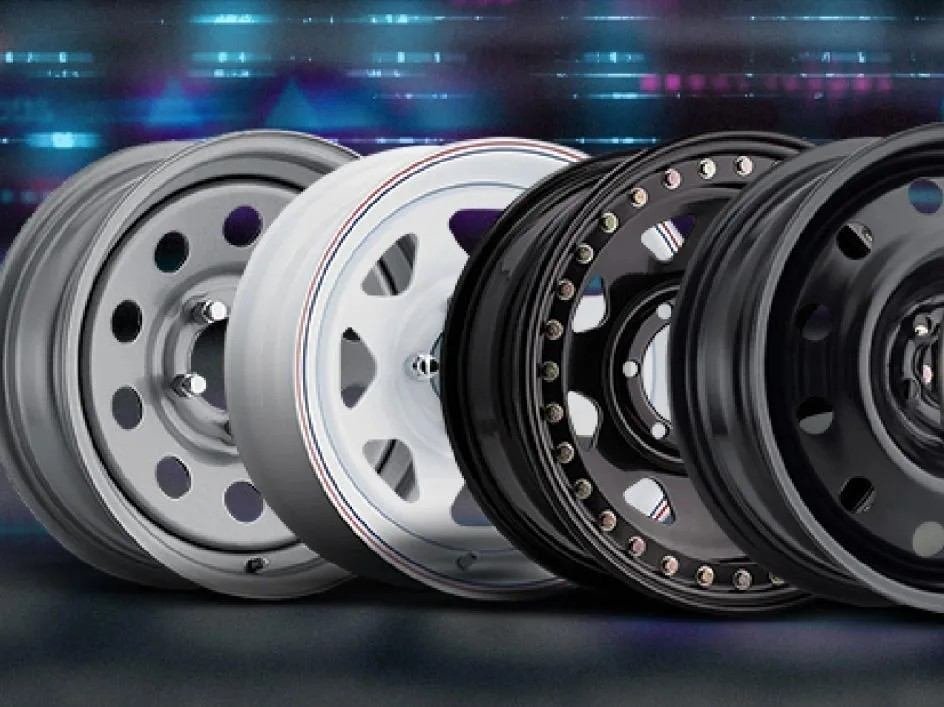
Pour des applications personnalisées, des fabricants comme BRS proposent jantes en acier des tailles de 6 à 18 pouces avec des entraxes, alésages centraux et charges admissibles personnalisables pour un usage commercial, remorque et agricole.
Erreurs de montage courantes à éviter
| Erreur courante | Conséquence directe |
|---|---|
| Se concentrer uniquement sur le diamètre en ignorant la largeur et le déport | Modifie le déport de scannage, change la sensation de direction, provoque une usure prématurée des pneus et de la suspension |
| Entraxe ou alésage central incompatible | Provoque des vibrations, une usure accélérée et de graves risques de sécurité dus à un montage desserré |
| Négliger les vérifications de dégagement des freins et de la suspension | Résulte en des roues inutilisables qui frottent contre les étriers ou les amortisseurs |
| Oublier la compatibilité du TPMS et de la quincaillerie | Empêche une installation correcte ou crée des conditions de montage dangereuses |
| Déport excessivement agressif | Provoque un contact avec les ailes, réduit le rayon de braquage et sollicite les roulements de moyeu |
| Dimension de pneu inadapté | Fausse la précision du compteur de vitesse/ABS et modifie le comportement routier |
FAQ
Comment le déport d'une jante affecte-t-il l'adaptabilité ?
Le déport détermine la position de la roue vers l'intérieur ou l'extérieur. Un déport incorrect peut provoquer le frottement du pneu contre les éléments de suspension ou les ailes, et modifie la sensation de direction en altérant le rayon de frottement.
Qu'est-ce qui provoque le frottement du pneu après un changement de roues ?
Le frottement du pneu est généralement causé par un déport incorrect (poussant le pneu trop vers l'extérieur) ou par un dégagement insuffisant dans le passage de roue. Cela peut également se produire avec des diamètres de pneus surdimensionnés lors de la compression de la suspension.
Que sont le recul (back space) et l'avancée (front space) ?
Le recul est la distance entre la surface de montage du moyeu et le bord intérieur de la roue. L'avancée est la distance entre la surface de montage et le bord extérieur. Ensemble, ils déterminent le dégagement intérieur par rapport à la suspension et le dégagement extérieur par rapport à l'aile.
Un léger changement de déport peut-il résoudre des problèmes de dégagement ?
Réduire le déport positif déplace la roue vers l'extérieur, ce qui augmente le dégagement par rapport à l'aile avant mais réduit le dégagement intérieur par rapport à la suspension. Vérifiez toujours le dégagement complet sur toute la course de la suspension après toute modification.
Les roues plus grandes dégradent-elles toujours la consommation de carburant ?
En général, oui. Des roues plus grandes et plus lourdes augmentent l'inertie de rotation et la résistance au roulement, ce qui réduit l'efficacité énergétique. La différence est faible pour une augmentation modeste de la taille, mais devient notable avec de très grandes roues ou des roues en acier lourdes.