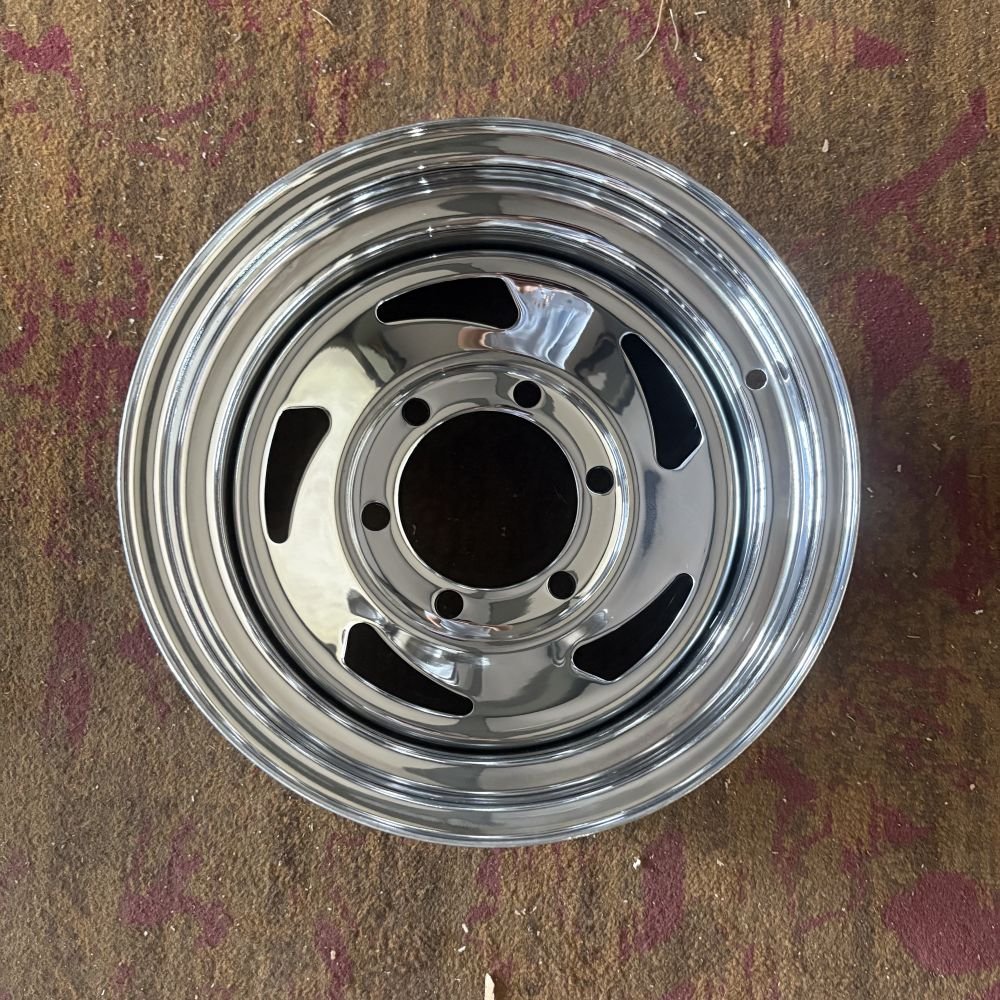


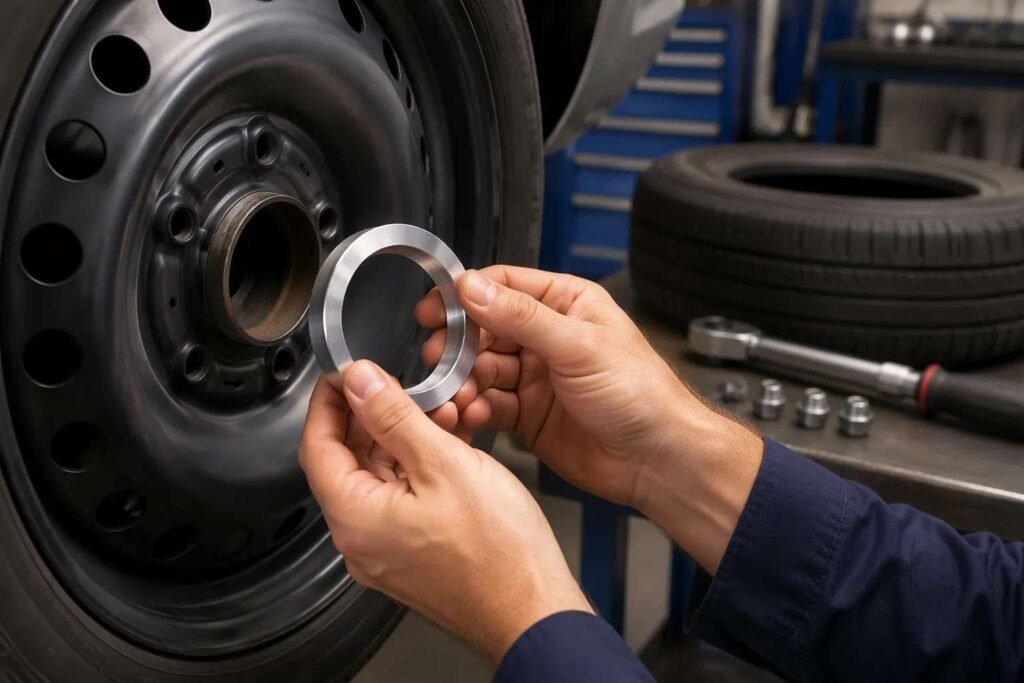
Yes, hub centric rings work on steel wheels, but only if the wheel’s center bore and mounting surface design can properly accommodate them. Many factory and aftermarket steel wheels are engineered to be lug-centric, meaning they center on the lug nuts rather than the hub, and do not require rings at all.
Hub centric rings fill the gap between the vehicle hub pilot and the wheel’s center bore to align the wheel perfectly during installation, reducing runout and highway vibration. Fitment depends entirely on the individual wheel’s design, not the steel material itself. This guide breaks down compatibility rules, when rings are needed, and how to measure and install them correctly.
Key Takeaways
- Hub centric rings work on steel wheels with a deep enough center bore and flat mounting surface.
- Always verify the wheel’s center bore size and mounting face thickness before purchasing rings.
- Measure both your vehicle hub and wheel center bore for an exact fit — never rely on vehicle model alone.
- Hub rings are installation centering aids only; they do not bear load or replace proper lug nut torque.
- Always torque lug nuts in a star (crisscross) pattern for safe, even clamping force.
What Are Hub Centric Rings & How Do They Work?
A hub centric ring is a thin plastic or metal adapter that sits between the vehicle’s hub pilot and the wheel’s center bore. Its only job is to fill the gap when the wheel’s center bore is larger than the hub diameter, so the wheel sits perfectly centered on the hub instead of relying solely on the lug nuts for alignment.
Wheel center bore fit falls into three categories:
- Bore matches hub exactly: The wheel is already hub-centric, and no ring is needed.
- Bore is larger than hub: A properly sized hub centric ring can fill the gap to center the wheel.
- Bore is smaller than hub: The wheel will not fit the vehicle at all, and no ring can fix this.
When installed correctly, the ring creates a snug, play-free fit that reduces wheel runout and vibration at highway speeds. Importantly, hub rings do not carry driving or load force — the clamping force of the lug nuts holds the wheel in place. Rings only simplify alignment during installation and help maintain centering as you torque the fasteners. Note that hub centric rings do not change bolt pattern, offset or load capacity — they only affect centering.
Can Hub Centric Rings Fit Steel Wheels?
Debate over hub rings on steel wheels centers on two competing arguments, both of which hold true depending on the specific wheel design:
- One side notes that many steel wheels have thin mounting faces and shallow center bores that cannot seat a ring fully. These wheels are intentionally lug-centric: they center on the lug studs and nuts as they tighten, with no provision for a hub ring.
- The other side notes that rings work perfectly well on steel wheels with deep, flat center bores, acting as a helpful installation guide to keep the wheel aligned while tightening lugs.
The difference comes down to individual wheel design, not the steel material itself.
Steel rims typically have tighter center bores than universal aftermarket alloy wheels, which are intentionally oversized to fit multiple vehicle hubs. Many steel wheels are engineered to match a specific hub diameter exactly, making them inherently hub-centric with no adapter required.
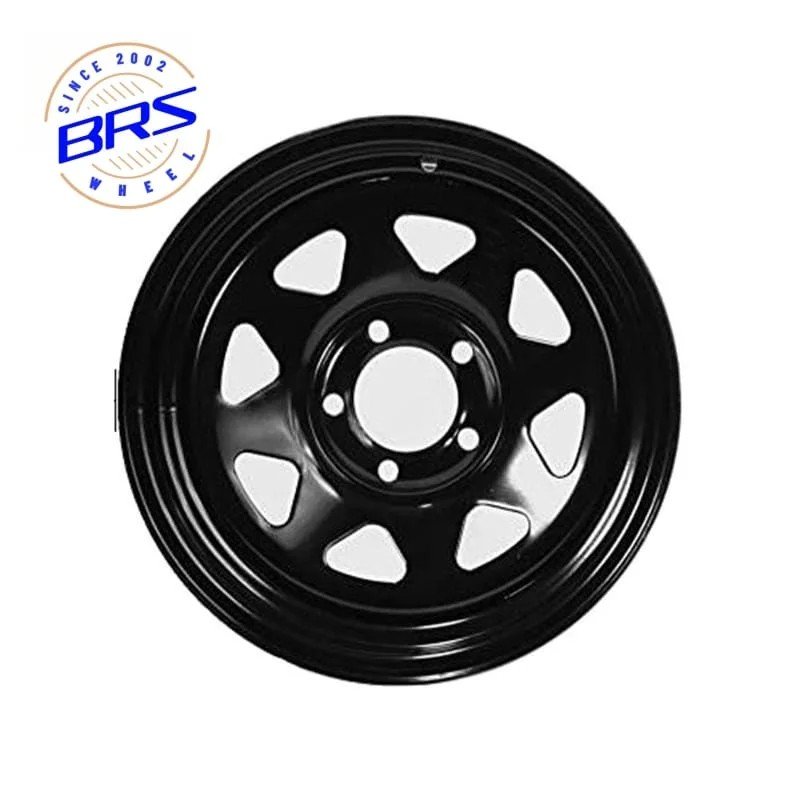
For example, the BRS steel wheel catalog spans 6–18 inch diameters for passenger cars, trailers, off-road vehicles, agricultural equipment and trucks, manufactured to IATF 16949 quality standards. With such a wide range of designs and bore dimensions, there is no universal answer for all steel wheels. Always confirm the center bore specification for your exact wheel model before ordering rings.
Critical Fitment Factor: Mounting Surface Thickness
For a ring to work, it must sit fully flush inside the wheel bore — it must not protrude past the mounting face. A thin steel wheel face may not have enough depth to seat the ring completely, leaving it sticking out and preventing the wheel from sitting flat against the hub. This causes uneven clamp load and can lead to vibration at speed.
When Do Steel Wheels Need Hub Centric Rings?
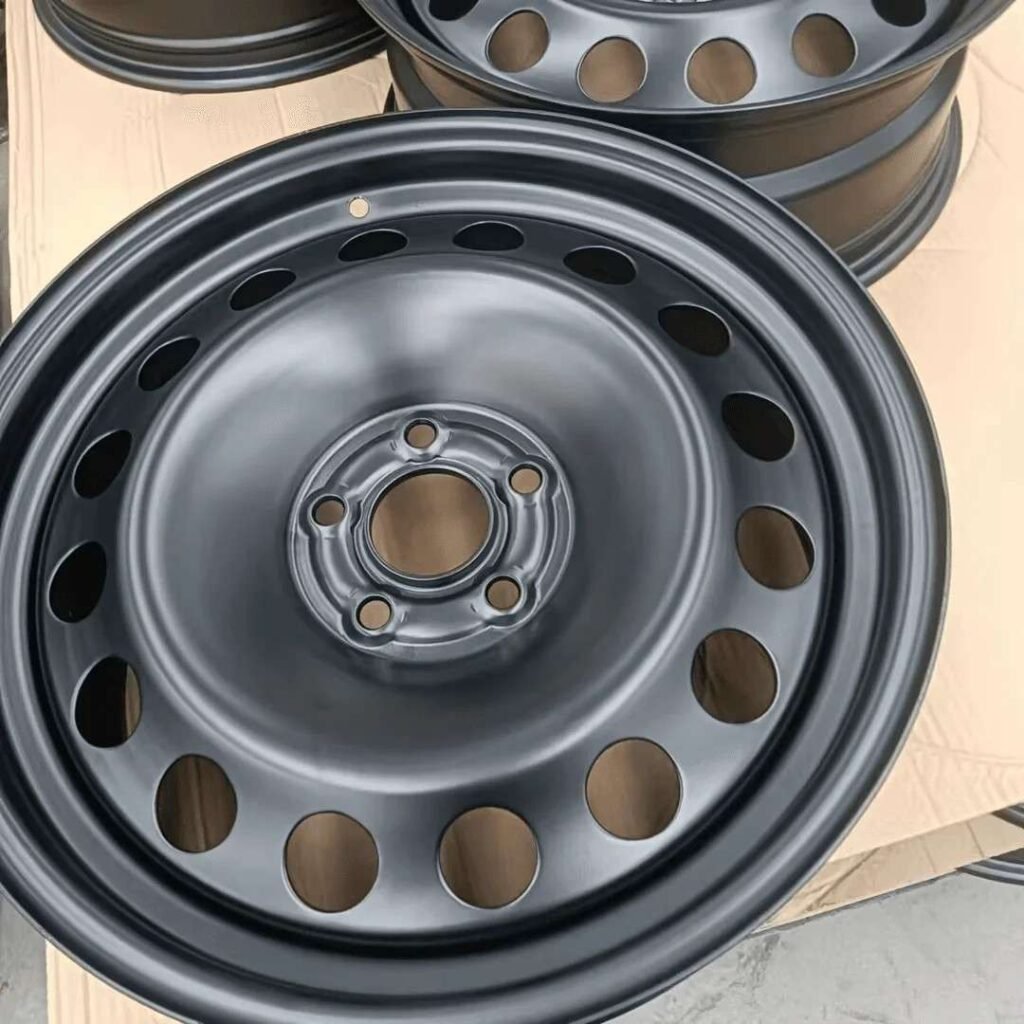
Steel wheels do not always need hub centric rings. In fact, most factory and application-specific steel wheels are designed to work without them.
Rings add value in two scenarios:
- The wheel’s center bore is noticeably larger than the hub pilot: A large gap lets the wheel shift off-center during installation, which can lead to vibration if the lugs are tightened unevenly. A ring holds the wheel true while you torque the nuts.
- You want extra installation precision: Rings make wheel mounting faster and more consistent, especially for DIY or frequent tire swaps like winter wheel setups.
Hub rings are most commonly used with universal-fit aftermarket alloy wheels, which use one large center bore to fit dozens of vehicle models. Steel wheels are usually application-specific with tighter, hub-matched bores, so they often need no adapter at all.
Do Hub Rings Fix Wheel Vibration?
Hub centric rings eliminate vibration caused by an off-center wheel, but they cannot fix vibration from other sources. They will not correct an unbalanced tire, a bent rim, or worn wheel bearings. If you experience shaking after installing new wheels, first check balance, lug torque and rim condition before assuming centering is the issue.
When Lug-Centric Fitment Is Sufficient
Lug-centric fitment is the standard for most factory steel wheels. As you tighten lug nuts in a star pattern, the tapered seats center the wheel automatically. When torqued correctly to manufacturer specs, a lug-centric setup is perfectly safe and smooth.
Adding a hub ring to a wheel designed for lug-centric fitment can cause problems if the ring does not seat fully flush. A protruding ring will hold the wheel off the hub face, creating exactly the vibration you are trying to fix.
How to Choose & Install Hub Centric Rings on Steel Wheels
Step 1: Measure Hub and Wheel Center Bore
Accurate measurement is the only way to guarantee fit. Never order rings based solely on your vehicle model — hub sizes can vary by trim and model year, and wheel bore sizes differ by manufacturer.
Follow this process:
- Lift the vehicle and remove the wheel. Thoroughly clean rust and debris from the hub pilot, as buildup will skew measurements.
- Measure the outer diameter of the vehicle hub pilot across its widest point. Take two perpendicular measurements and average them for accuracy.
- Measure the inner diameter of the wheel’s center bore across the opening in the mounting face. Again, average two perpendicular readings.
- Compare the two numbers: if the wheel bore is larger, you can use a ring sized to match both diameters exactly. If the bore is smaller, the wheel will not fit your hub.
If you are sourcing new steel wheels, work with your supplier to confirm center bore dimensions upfront. BRS offers custom sizing, finishing and branding options for bulk steel wheel orders, so you can match bore dimensions to your exact vehicle hub.
Step 2: Test Fit and Install
Always do a dry test fit before final installation:
- Press the ring onto the hub pilot by hand. It should fit snugly with light pressure and sit completely flush with the hub face.
- Slide the wheel onto the hub without lug nuts. The ring should fit inside the wheel bore with no play or rocking.
- Verify the ring does not protrude past the wheel’s mounting face. If it sticks out, the ring is the wrong size or the wheel bore is too shallow to accept it.
- Install lug nuts and torque them in a star (crisscross) pattern using a calibrated torque wrench, following the wheel manufacturer’s spec.
- Recheck torque after the first 50–100 miles of driving.
- Do a test drive at highway speed to confirm no new vibration. If you feel shaking, recheck seating, balance and torque before driving further.
FAQ
Do hub rings make steel wheels safer?
No. Hub rings do not add strength or load capacity. The clamping force of properly torqued lug nuts is what holds the wheel safely in place. Rings only help center the wheel during installation — correct star-pattern torque is far more critical for safety.
Can a hub ring fix a shaking wheel?
It can fix shaking caused by an off-center wheel, but it will not fix vibration from an unbalanced tire, bent rim, or worn wheel bearings. Always check balance and lug torque first, then test if centering resolves remaining shake.
How tight should a hub centric ring fit?
The ring should press onto the hub with light hand pressure, and fit snugly inside the wheel bore with no side-to-side play or rocking. A loose ring will not help center the wheel, while a ring that will not seat flush is a size mismatch.
Does every wheel with a large center bore need a hub ring?
Not necessarily. A larger bore does allow the wheel to shift during installation, but a properly torqued star-pattern lug setup will still center a lug-centric wheel correctly. Rings are a helpful aid, not a mandatory requirement for all oversized bores.
Can one hub ring fit multiple vehicles?
No. Each ring is sized to one specific hub diameter and one specific wheel center bore. Always measure both your hub and wheel to get an exact match. A ring sized for another vehicle will not seat correctly and can cause vibration issues.