
You want your trailer to work well and keep things safe. LT tires are not suitable for boat trailers or trailers equipped with steel trailer wheels. LT tires have soft sides, carry less weight, and do not handle heat well. ST trailer tires have harder sides and can carry more weight. This makes them safer and better for towing. The table below shows why ST tires are better for safety and performance:
Feature | LT Tires | ST Trailer Tires |
|---|---|---|
Load Capacity | Carry less weight | Carry more weight |
Sidewall Flex | Softer sides, less steady | Harder sides, less swaying |
Heat Resistance | Not good with heat | Handles heat better |
You need the right tires for your trailer. This is true if you use boat trailer rims or buy from a chrome wheel manufacturer. LT tires are not good for boat trailers. Tire safety and safe towing require real trailer tires for every trailer, especially when using steel trailer wheels.
Key Takeaways
Always use ST tires on trailers. These tires are made for heavy loads. They help keep you safe on the road.
Look at the load ratings on your trailer tires. The right load capacity is very important for safe towing.
Do not mix LT and ST tires. Using one type helps tires wear evenly. It also makes handling more stable.
Check your tires often for wear and air pressure. This can stop blowouts and accidents from happening.
Follow the laws for trailer tires. Using the right tires keeps you legal. It also protects your warranty.
Load Ratings for Trailers and Steel Trailer Wheels
Tire Load Capacity and Trailer Safety
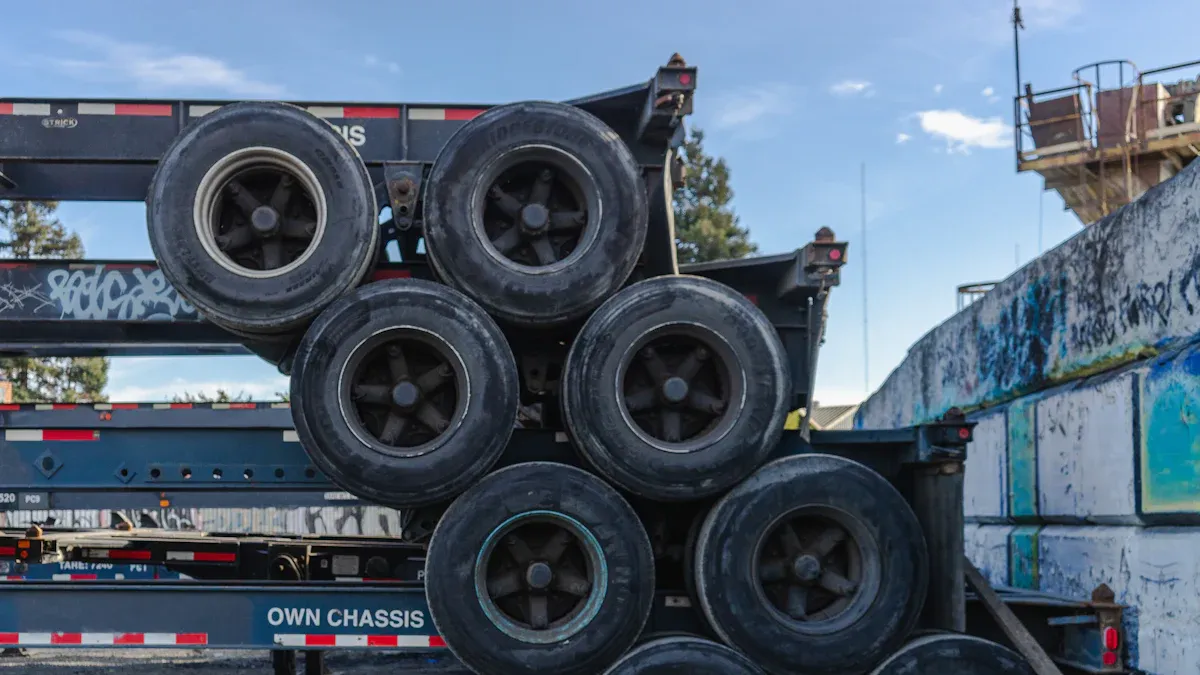
You need to understand how load ratings affect your trailer’s safety. Every steel trailer wheel from BRS is built to handle heavy loads. The wheels use strong construction to support your cargo. You must match these wheels with trailer tires that have the right load capacity. If you use LT tires, you risk problems because they do not offer the higher load capacity that trailers require.
ST tires are designed for trailers. They have a special internal construction and load ratings that match the demands of steel trailer wheels. LT tires are made for light trucks, not trailers. Their construction does not support the same load. When you use LT tires, you lower the safety of your trailer. You may see uneven tire loading if you mix tire sizes or types. This can cause one tire to carry too much load. Overloaded tires can fail and cause accidents.
Tip: Always check the load ratings on your trailer tires before you install them on steel trailer wheels. This helps you avoid blowouts and keeps your trailer safe.
Here are some important points about load rating mismatches:
All tires should be the same size to prevent uneven loading.
Uneven tire loading can lead to at least one tire being overloaded.
Mismatched tires can change how your trailer handles and make it less stable.
Why Steel Trailer Wheels Need Proper Tire Ratings
Steel trailer wheels need tires with the right ratings to work safely. BRS steel trailer wheels have strong construction, but they rely on trailer tires with enough load capacity. ST tires give you the support you need for heavy cargo. LT tires do not have the same load ratings or construction. If you use LT tires, you increase the risk of blowouts, especially during long trips in hot weather. Tire pressure can rise, and tires with low load capacity can fail.
You should choose ST tires for your steel trailer wheel because they are made for trailers. Their construction helps them handle the load and stress. LT tires may work for trucks, but they do not have the right ratings for steel trailer wheels. Properly rated trailer tires last longer and wear less. You get better performance and safety when you use ST tires.
Here is a simple checklist for choosing tires for your steel trailer wheel:
Check the load ratings on your trailer tires.
Make sure the tires match the load capacity of your steel trailer wheel.
Use ST tires for trailers, not LT tires.
Avoid mixing tire sizes or types.
Inspect your tires for wear and replace them if needed.
ST tires have a higher load capacity and special construction for trailers. LT tires do not meet these needs. You protect your trailer and cargo when you use the right tires. Always match your steel trailer wheel with ST tires for the best results.
Sidewall Strength and Trailer Stability
Sidewall Flex in LT Wheels vs. Trailer Wheels
You need to pay close attention to sidewall strength when choosing tires for your trailer. The sidewall is the part of the tire that connects the tread to the wheel. It plays a big role in how your trailer handles weight and movement. LT tires and ST tires have different sidewall strengths and construction features. The table below shows these differences:
Tire Type | Sidewall Strength | Construction Features |
|---|---|---|
LT | Weaker | Designed for comfort, not heavy loads |
ST | Stronger | Thicker sidewalls, made for towing, larger cords, harder rubber compound |
ST tires have thicker and stronger sidewalls. They use larger cords and a harder rubber compound. This design helps them handle the heavy loads that trailers often carry. LT tires, on the other hand, have weaker sidewalls. They focus on comfort for trucks, not on carrying heavy cargo. You need stiffer sidewalls to keep your trailer safe and steady.
Impact on Sway and Handling for Trailers
Sidewall flex affects how your trailer moves on the road. Softer sidewalls in LT tires allow more movement, which can lead to sway. Sway happens when your trailer rocks or leans from side to side. This can make driving unsafe, especially at high speeds or in strong winds. The table below explains how sidewall characteristics affect sway:
Tire Type | Sidewall Characteristics | Effect on Trailer Sway |
|---|---|---|
ST | Thick, rigid sidewalls | Minimizes sway |
LT | Softer sidewalls | Increases sway |
ST tires resist movement under load. This helps keep your trailer stable. LT tires allow more flex, which can cause instability and more sway. You want your trailer to stay steady, even when you face crosswinds or sharp turns. ST tires help you achieve this by keeping the trailer upright and balanced.
ST tires perform well against crosswinds and sharp corners, keeping your trailer stable.
LT tires’ flexibility can cause the trailer to lean, which is a problem on highways.
The higher center of gravity in many trailers, combined with sidewall flex in LT tires, can make sway worse. You should always choose tires that help control sway and improve handling. This keeps you and your cargo safe on every trip.
Heat Buildup and Tire Wear on Trailers
Heat Generation in LT Tires During Towing
When you pull a trailer, your tires get hot. LT tires are not made for trailers. They deal with heat in a different way than trailer tires. You should know how this can affect your safety. It can also raise the chance of tire problems. LT tires have thinner sides and softer rubber. This makes them weaker against heat and stress from heavy loads. ST trailer tires have thicker sides and harder rubber. These things help them fight heat and last longer.
Here are the main ways heat builds up:
LT tires are not for towing, so they get hotter with heavy loads.
ST trailer tires have thick sides and strong cords for towing.
ST tires use hard rubber, which helps them last longer and fight sun damage.
Keeping the right air pressure is important. If LT tires do not have enough air, they can get too hot and blow out.
If you use LT tires on your trailer, you have a bigger chance of heat problems. This can cause tire failure and make driving unsafe.
Risks of Blowouts and Premature Tire Failure
Tire wear is also important when picking trailer tires. LT tires wear out faster on trailers. They are not made for heavy loads or long trips. ST trailer tires are built for trailers and last longer. They do not wear out as fast and lower the chance of early failure.
The table below shows how LT tires and ST trailer tires are different:
Feature | LT Tires | ST Tires |
|---|---|---|
Sidewall Thickness | Thinner | Thicker |
Load Capacity | Lower (20% less than ST) | Higher (designed for heavier loads) |
Construction | Softer rubber, designed for comfort | Harder rubber, more sidewall strength |
Tread Design | More patterns available | Designed for low resistance towing |
Aging Resistance | Less resistant | More chemicals for UV resistance |
You want your trailer tires to last and work well. LT tires can fail early because they wear out fast and cannot handle heat. ST trailer tires protect you better from blowouts and tire failure. You lower the risk of early failure when you pick the right tires for your trailer.
Tip: Always check your tire pressure and look at your trailer tires before every trip. This easy step helps you stop blowouts and keeps your trailer safe.
You keep your trailer and cargo safe when you use ST trailer tires. LT tires might work for trucks, but they do not give you the safety or strength you need for trailers.
Legal, Warranty, and Insurance Issues for Trailer Wheels
Compliance with Trailer Tire Standards
You need to follow rules when you pick trailer tires for your trailer. The law says you must use tires that meet special standards for trailers. These standards help keep you safe on the road. If you use tires made for trucks instead of trailer tires, you may break these rules. You can find these standards on the tire sidewall. Look for markings like “ST” for Special Trailer. These markings show the tire is made for trailers and meets the right safety standards.
Here is a simple table to help you check your tires:
Tire Marking | Use For | Meets Trailer Standards? |
|---|---|---|
ST | Trailer | Yes |
LT | Light Truck | No |
Note: Always check your trailer tires before you travel. Using the wrong tires can lead to fines or trouble with the law.
Warranty and Insurance Implications
You want to protect your trailer and your wallet. If you use the wrong tires, you may lose your warranty. Most trailer makers say you must use trailer tires for your trailer. If you use truck tires, your warranty may not cover damage. Insurance companies also look at your tires. If you have an accident and you used the wrong tires, your insurance may not pay for repairs.
Here are some things you should do:
Read your trailer manual to see what tires you need.
Ask your insurance company about tire rules.
Keep records of your trailer tires and when you replace them.
Tip: Using the right trailer tires helps you keep your warranty and insurance. It also keeps your trailer safe.
You make smart choices when you follow these steps. Trailer tires are made for trailers. They help you meet legal rules, keep your warranty, and protect your insurance. You keep your trailer safe and avoid problems when you use the right tires.
Difference Between ST and LT Tires for Trailers

Key Design and Performance Differences
You need to know the difference between st and lt tires before you choose tires for your trailer. St tires are purpose-built for trailers. They have a strong design that helps them carry heavy loads and stay stable on the road. Lt tires are made for light trucks. They focus on comfort and handling, not on carrying big loads for long distances.
Here is a table that shows the main design features:
Tire Type | Key Design Features |
|---|---|
ST Tires | Reinforced construction, stiffer sidewalls, designed for heavy loads, engineered to track straight, specialized heat dissipation. |
LT Tires | Focus on traction and handling performance, suitable for sharp turns and sudden direction changes, less emphasis on load support compared to ST tires. |
St tires have thick sidewalls and strong cords. This helps them stay firm when you turn or carry heavy cargo. Lt tires have softer sides. They work well for trucks but not for trailers. St tires also use special rubber that fights heat and lasts longer. You get better safety and less sway with st tires on your trailer.
You should remember the difference between st and lt tires when you pick trailer tires. St tires are made for trailers. Lt tires are not.
Choosing the Right Tires for Your Steel Trailer Wheel
You want your trailer to be safe and last a long time. You need to match your tires to your steel trailer wheel. Here are some things you should check:
Load rating: Each tire must support the weight of your trailer and cargo.
Speed rating: Make sure your trailer tires are safe for highway speeds.
Appropriate sizing: The tire size must fit your trailer’s wheel size and bolt pattern.
Here is a table to help you:
Factor | Description |
|---|---|
Size | The wheel size must match the tire size for safety, including diameter, width, bolt pattern, and offset. |
Load Capacity | The load capacity of the wheels and tires must be compatible with the trailer’s load rating. |
Construction Type | Choose between steel and alloy wheels based on strength, durability, and cost considerations. |
St tires are the best choice for steel trailer wheels. They give you the strength, safety, and long life you need for your trailer. Lt tires do not have the right design for trailers. Always pick st tires for your trailer to keep your trips safe and smooth.
Tip: Check your trailer manual for the right tire size and type before you buy new trailer tires.
You should never use lt tires on your trailer with steel trailer wheels. The table below shows why st trailer tires work better for trailers:
Feature | lt tires | st trailer tires |
|---|---|---|
Sidewall Strength | Thinner | Thicker, stronger |
Load Handling | Not for heavy loads | Built for heavy trailer loads |
Cord Strength | Smaller cords | Larger, stronger cords |
Rubber Compound | Softer | Harder, resists aging |
To keep your trailer safe, always match the tire type to your trailer and wheel. Follow this checklist before you buy trailer tires:
Check tire size, load rating, and air pressure.
Inspect for cracks or bulges.
Make sure the tire fits your trailer’s wheel.
Choose st trailer tires, not lt.
Ask a tire professional or read your trailer manual.
You protect your trailer, cargo, and everyone on the road when you use the right trailer tires.
FAQ
What happens if you use LT tires on your trailer?
You risk blowouts and poor handling. LT tires do not support the heavy loads that a trailer carries. You may see more sway and faster tire wear. Always choose the right tires for your trailer.
Can you mix LT and ST tires on the same trailer?
You should not mix them. Mixing tire types can cause uneven wear and unsafe handling. Your trailer needs all tires to match for best performance and safety.
How do you know if a tire is for a trailer?
Look for “ST” on the tire sidewall. This marking means the tire is made for a trailer. You can also check your trailer manual for the correct tire type.
Why do trailers need special tires?
Trailers carry heavy loads and face different stresses than cars or trucks. Special trailer tires have strong sidewalls and tough rubber. These features help your trailer stay stable and safe.
How often should you check your trailer tires?
Check your trailer tires before every trip. Look for cracks, low air, or worn tread. Keeping your tires in good shape helps prevent accidents and keeps your trailer safe.